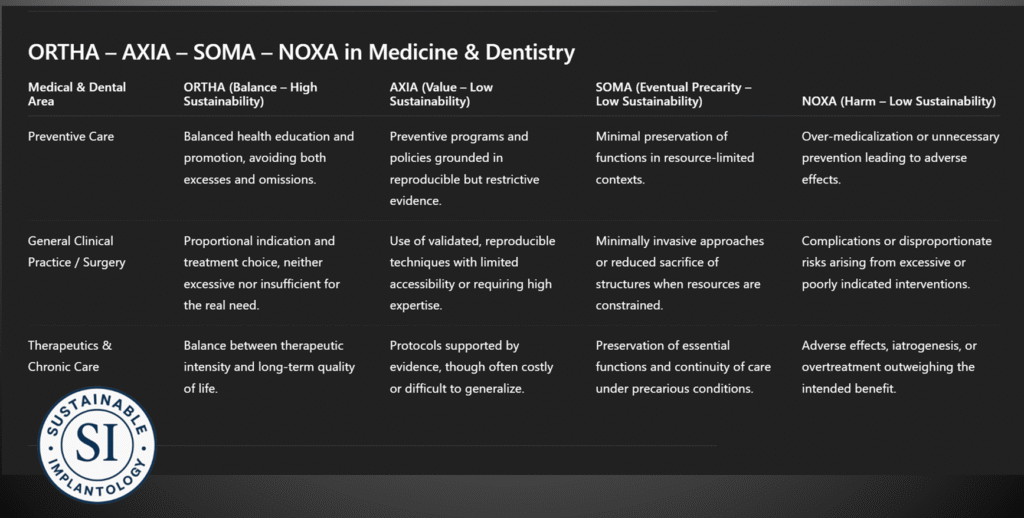
Sustainable Implantology is the point of origin of a paradigm that rises beyond its own field. In its conceptual ascent, it contributes a transferable framework—ORTHA, AXIA, SOMA, and NOXA—to Dentistry in general. This is not a mere technical extension, but the consolidation of a shared language of criteria capable of guiding clinical judgment across diverse contexts.
The strength of this framework lies in its capacity to universalize principles of balance, high-value action, potential precarity, and potential harm throughout dental practice, turning sustainability into a common interpretive compass rather than an isolated specialty concern.
Moreover, by establishing itself as an applicable set of categories, Sustainable Implantology projects its foundations into Medicine and the Health Sciences as a whole. The transition from the implantology domain to broader medical fields enables a cross-disciplinary lens of sustainability—one that appraises decisions not only by immediate feasibility, but by their proportional integration of benefits, risks, and responsible stewardship of resources over time.
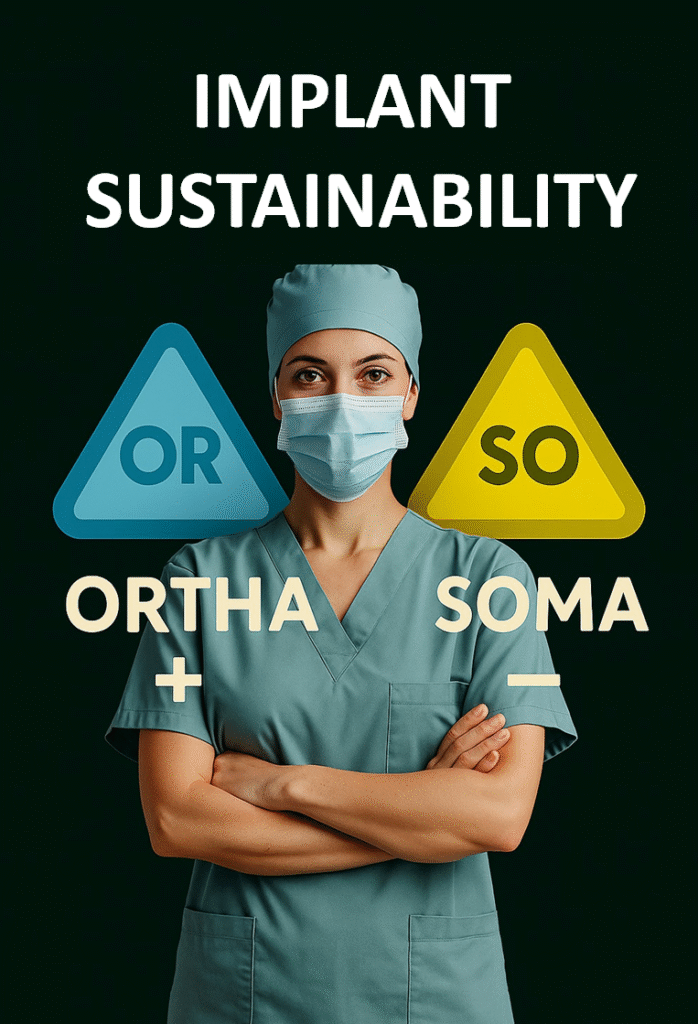
Sustainable Dentistry under the ORTHA-AXIA-SOMA-NOXA framework
Sustainable Implantology was the starting point: it defined a unique language that allows for classifying and guiding clinical decisions based on sustainability criteria.
This same language can be applied to all of dentistry and, in a broader sense, to medicine in general.
The Four Universal Concepts
ORTHA (Balance)
The right measure in its highest expression. It does not depend on evidence of results, but on prudent and proportional clinical judgment, which integrates benefit, risk, and resources in a balanced manner. It can represent a relatively stable horizon of sustainability.
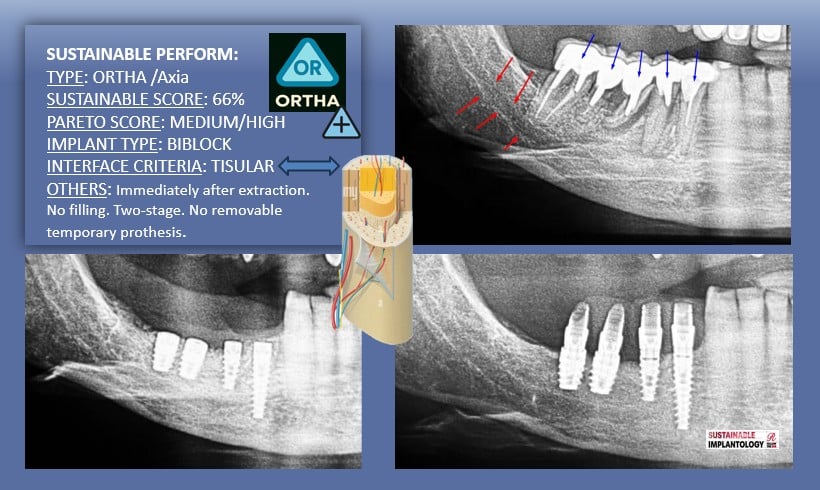
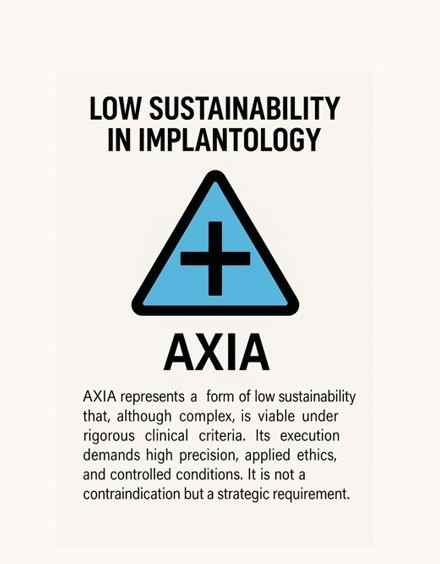
AXIA (Clinical Value, Safety)
Procedures of high clinical value, consistency, and safety. However, this value can become ambivalent: reproducible in optimal settings, but restrictive due to technical difficulty, cost, or limited access.
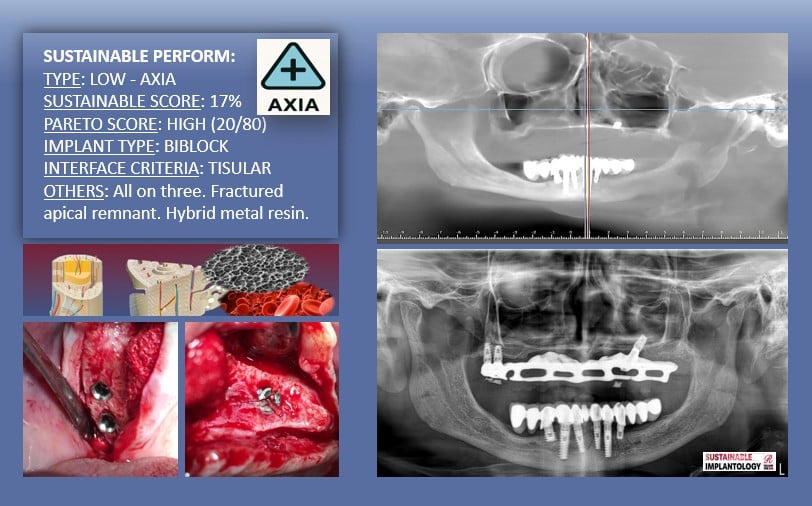
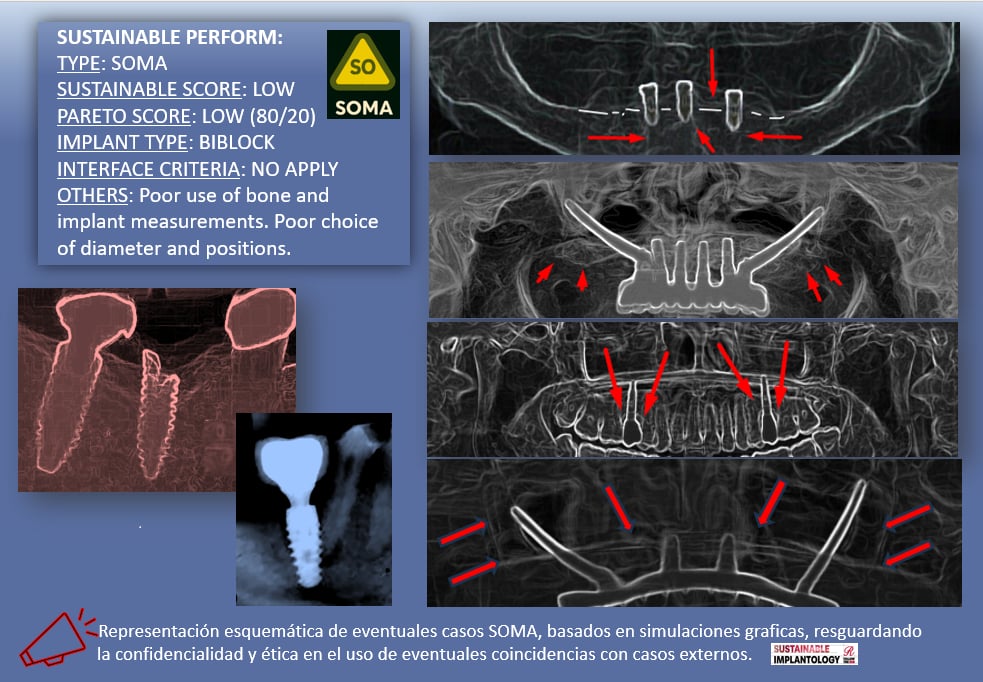
SOMA (The Body, Biological Capital)
Contexts of limited or insufficient resources in which minimal solutions are applied. They do not equate to harm (NOXA), but represent a level bordering on precariousness, where sustainability is reduced to the basics.
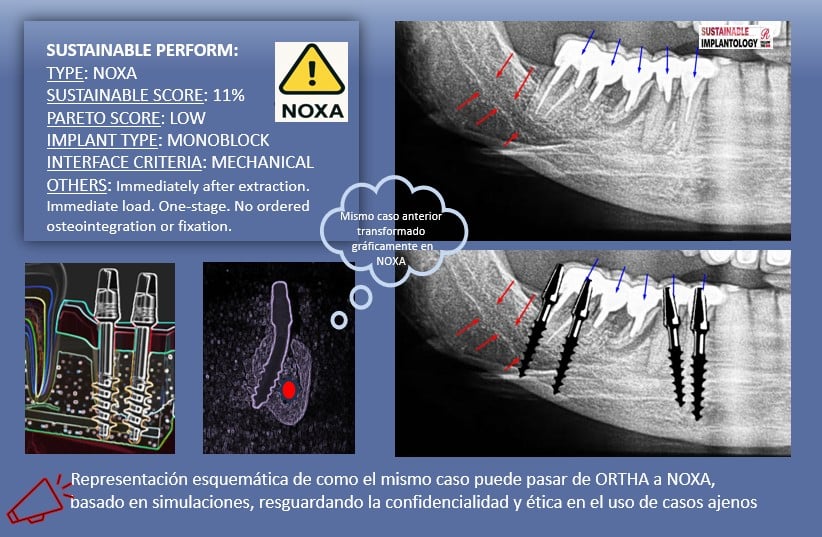
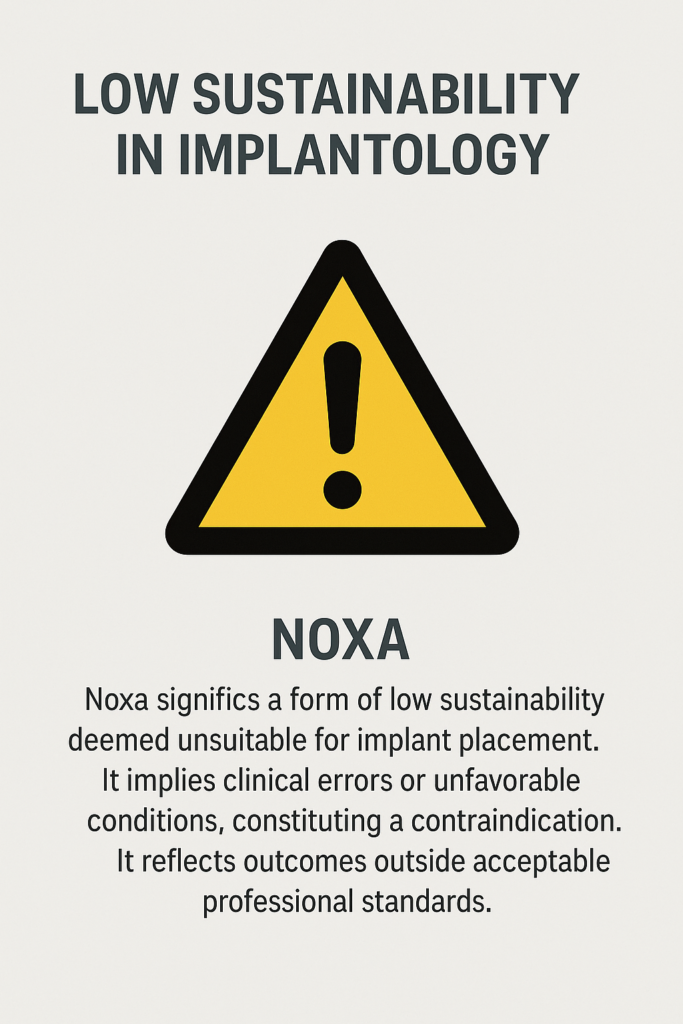
NOXA (The Harm, the Biological and Social Cost)
NOXA refers to interventions with a potential risk of harm, whether due to excess, disproportion, or error. It is the zone of low sustainability, where the harm outweighs the benefit.
TRASPOSITION TO DENTAL AREAS (as a generical examples)
Pediatric Dentistry:
NOXA = Disproportionate interventions that cause unnecessary trauma or irreversible damage to developing teeth and tissues.
ORTHA = Balance between prevention and treatment, prioritizing proportional interventions with low or moderate risk.
AXIA = High-complexity procedures that require advanced skills, a steep learning curve, and reproducibility limited to specialized centers.
SOMA = Care conditioned by scarce resources, with minimal or provisional techniques that maintain function without achieving full quality.
Orthodontics:
NOXA = Severe complications such as root resorptions, iatrogenesis, or endless treatments with functional sequelae.
ORTHA = Adjusted treatments that seek function and stability, avoiding overtreatment and unnecessary prolongation.
AXIA = Modern, digitalized, or highly complex protocols with a prolonged learning curve and eventual risk if not mastered.
SOMA = Tooth movements applied without respecting biology or physiological timing, leading to precarious results.
Prosthetics and Rehabilitation:
NOXA = Prosthetic failures or inadequate designs that compromise the patient’s oral and systemic health.
ORTHA = Rehabilitation proportional to the patient’s needs, without excesses or unnecessary indications.
AXIA = Use of innovative materials and advanced protocols, predictable in controlled contexts, but not always accessible and requiring superior skills.
SOMA = Solutions that preserve abutment teeth and mucosa, although limited in resources and outcomes.
Oral and Maxillofacial Surgery:
NOXA = Severe postoperative complications, functional or social, resulting from disproportionate or poorly executed interventions.
ORTHA = Surgeries indicated only when strictly necessary and proportional to the clinical condition.
AXIA = High- or medium-complexity techniques—such as digital planning, guided surgery, zygomatic or subperiosteal implants, transnasal implants, pterigoides, trasposition & bypass of the dental inferior nerve, etc., etc., possiblly effective but with risk and dependent on advanced training and technology.
SOMA = Procedures aimed at relative preservation of bone, nerves, and aesthetic structures, though conditioned by limited resources.
TRASPOSITION TO GENERAL MEDICINE
ORTHA – AXIA – SOMA – NOXA in Medicine
Medicine, understood as both science and practice in the service of life, can be analyzed through the lens of sustainability by means of four conceptual categories that originate in Sustainable Implantology and extend to all of its branches. These four axes —ORTHA, AXIA, SOMA, and NOXA— constitute a transversal language to interpret the medical act beyond particular contexts, establishing a common criterion of balance, value, precarity, and harm.
ORTHA represents balance in medical decision-making. It is not only about selecting an appropriate treatment but about proportionally weighing the benefits, risks, and resources involved. Sustainable medicine recognizes ORTHA as the expression of the “golden mean”: interventions that neither overtreat nor fail to act when necessary, creating a horizon of stability and trust for both professionals and patients.
AXIA is linked to the value of medical practices in their reproducible and reliable dimension. Sustainable medicine does not rely on heroic skills or exceptional contexts, but on validated methods, with consistency in outcomes and accessibility to the majority of trained professionals. AXIA is the dimension that grants predictability, ethical standardization, and practical applicability, reducing extreme variability and ensuring that knowledge remains transferable.
SOMA reflects eventual precarity. It is the situation in which medical practice must be sustained in contexts of scarce resources, applying minimal solutions that preserve essential functions, although without reaching an optimal level. It is not harm in itself, but rather a borderline state, close to precariousness, where sustainability is preserved in its most fragile form. SOMA illustrates that medicine must also be able to respond in adverse scenarios, even if the standard is reduced.
NOXA designates harm. It is the zone in which interventions, through excess, error, or disproportionality, cause more damage than benefit. Here sustainability collapses, whether through adverse effects, iatrogenesis, or the unjustified omission of necessary care. NOXA emphasizes the medical responsibility of preventing action or inaction from becoming a source of deterioration for the individual and the community.
In this way, Medicine as a whole finds in ORTHA, AXIA, SOMA, and NOXA an interpretive framework that transcends disciplines and contexts. These categories, born from implantological reflection, provide a conceptual cartography capable of guiding clinical practice toward real sustainability—one that does not depend solely on technical advances, but on the conscious integration of balance, value, resilience in the face of precarity, and the prevention of harm.
ORTHA – Positive Balance
Bibliography: Dentistry
Feller, L., Lemmer, J., & Khammissa, R. A. G. (2020). Judgment and decision-making in clinical dentistry. Journal of International Medical Research, 48(12). https://pmc.ncbi.nlm.nih.gov/articles/PMC7708710/
Ustrell-Torrent, J. M., Berini-Aytés, L., & Gay-Escoda, C. (2021). Ethical relationship in the dentist-patient interaction. Journal of Clinical and Experimental Dentistry, 13(1), e74–e81. https://pmc.ncbi.nlm.nih.gov/articles/PMC7781216/
Miniggio, H., McIlroy, R., & Holmes, R. D. (2021). Virtue ethics in dentistry. British Dental Journal, 230(10), 613–617.
Bibliography: Medicine
Beauchamp, T. L., & Childress, J. F. (2019). Principles of biomedical ethics (8th ed.). Oxford University Press.
Gracia, D. (2001). Moral deliberation: The method of clinical ethics. Ars Medica, 4(1), 29–42. https://scielo.conicyt.cl/scielo.php?pid=S0717-92002001000100004&script=sci_arttext
Pellegrino, E. D., & Thomasma, D. C. (1993). The virtues in medical practice. Oxford University Press.
AXIA – The ambivalent value
Dentistry Bibliography
FDI World Dental Federation. (2022). Consensus on environmentally sustainable oral healthcare. https://www.fdiworlddental.org/sites/default/files/2022-12/consensus-on-environmentally-sustainable-oral-healthcare.pdf
Martin, N., & Mulligan, S. (2021). Environmental sustainability through good-quality oral healthcare. International Dental Journal, 71(6), 461–466. https://pmc.ncbi.nlm.nih.gov/articles/PMC9275203/
Field, J., Stone, S. J., & Martin, N. (2023). Embedding environmental sustainability within oral health professional curricula. European Journal of Dental Education, 27(3), 439–447.
Royal College of Surgeons of England. (2021). Clinical guidelines for environmental sustainability in dentistry. RCS England.
FDI World Dental Federation. (2021). Vision 2030: Delivering optimal oral health for all. International Dental Journal, 71(S2), S1–S52. https://pmc.ncbi.nlm.nih.gov/articles/PMC9188664/
Bibliography Medicine
Sackett, D. L., Rosenberg, W. M., Gray, J. A., Haynes, R. B., & Richardson, W. S. (1996). Evidence-based medicine: what it is and what it isn’t. BMJ, 312(7023), 71–72.
Greenhalgh, T., Howick, J., & Maskrey, N. (2014). Evidence based medicine: a movement in crisis? BMJ, 348, g3725.
Ioannidis, J.P. (2016). Evidence-based medicine has been hijacked. Journal of Clinical Epidemiology, 73, 82–86.
Gracia, D. (2002). Evidence-based medicine: a new paradigm? Medicina Clínica, 118(10), 377–384.
González-López, J. R. (2018). Evidence-based medicine: lights and shadows. Revista Clínica Española, 218(2), 88–91.
SOMA – Eventual precariousness
Bibliography: Dentistry
Northridge, M. E., Kumar, A., & Kaur, R. (2020). Disparities in access to oral health care. Annual Review of Public Health, 41, 513–535. https://pmc.ncbi.nlm.nih.gov/articles/PMC7125002/
MacDougall, H. (2016). Dental disparities among low-income American adults. Health & Social Work, 41(2), 119–127. https://pmc.ncbi.nlm.nih.gov/articles/PMC4985883/
Rocha-Buelvas, A. (2013). Analysis of access to oral health services. Revista de Salud Pública, 15(2), 196–206. https://www.scielo.org.co/scielo.php?pid=S1657-70272013000200008&script=sci_arttext
Bibliography: Medicine
Marmot, M. (2005). Social determinants of health inequalities. The Lancet, 365(9464), 1099–1104.
Kruk, M. E., Gage, A. D., Arsenault, C., et al. (2018). High-quality health systems in the SDG era: time for a revolution. The Lancet Global Health, 6(11), e1196–e1252.
Pan American Health Organization (PAHO). (2019). Universal health in the Americas: 40 years of Alma-Ata. PAHO. https://iris.paho.org/handle/10665.2/51613
NOXA – Risk of harm
Bibliography Dentistry
Padmanabhan, V. (2024). Patient safety in dentistry: What do we need to know? Journal of Patient Safety and Infection Control, 12(1). https://pmc.ncbi.nlm.nih.gov/articles/PMC11086509/
Zentz, S. E. (2024). Safety and risk management in dental practice. Journal of Dental Education, 88(2), 123–131.
Ramirez, L. M. (2018). Dentistry and ethics: oversupply and overtherapy. Clinical Journal of Periodontics, Implantology and Oral Rehabilitation, 11(1), 5–8. https://www.scielo.cl/scielo.php?pid=S0718-381X2018000100057&script=sci_arttext
Bibliography: Medicine
Kohn, L. T., Corrigan, J. M., & Donaldson, M. S. (2000). To err is human: Building a safer health system. National Academies Press.
World Health Organization. (2017). Patient safety: Making health care safer. WHO. https://apps.who.int/iris/handle/10665/255507
Aranaz-Andrés, J. M., Aibar, C., Limón, R., et al. (2008). Incidence of adverse events in Spanish hospitals: ENEAS study. Journal of Healthcare Quality, 23(1), 8–14. https://scielo.isciii.es/scielo.php?pid=S1134-282X2008000100002&script=sci_arttext